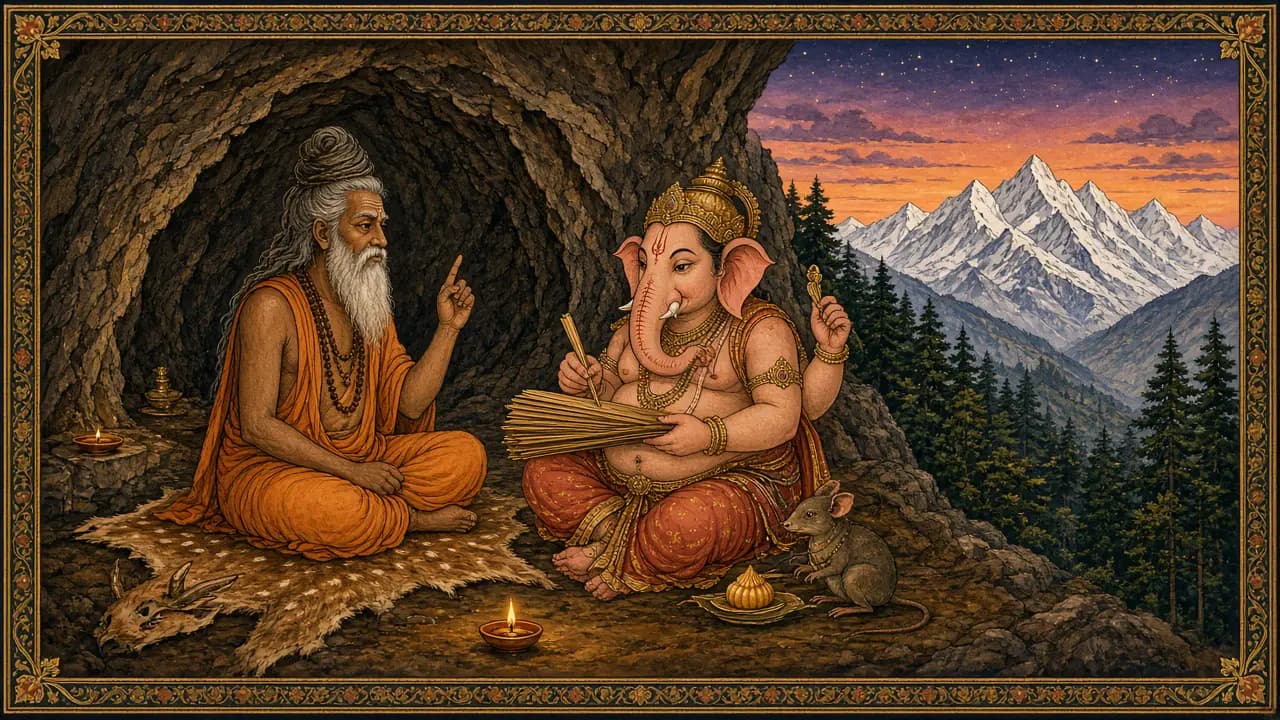
Mahabharata in 18 Parvas
The whole epic, book by book, told as the text tells it.
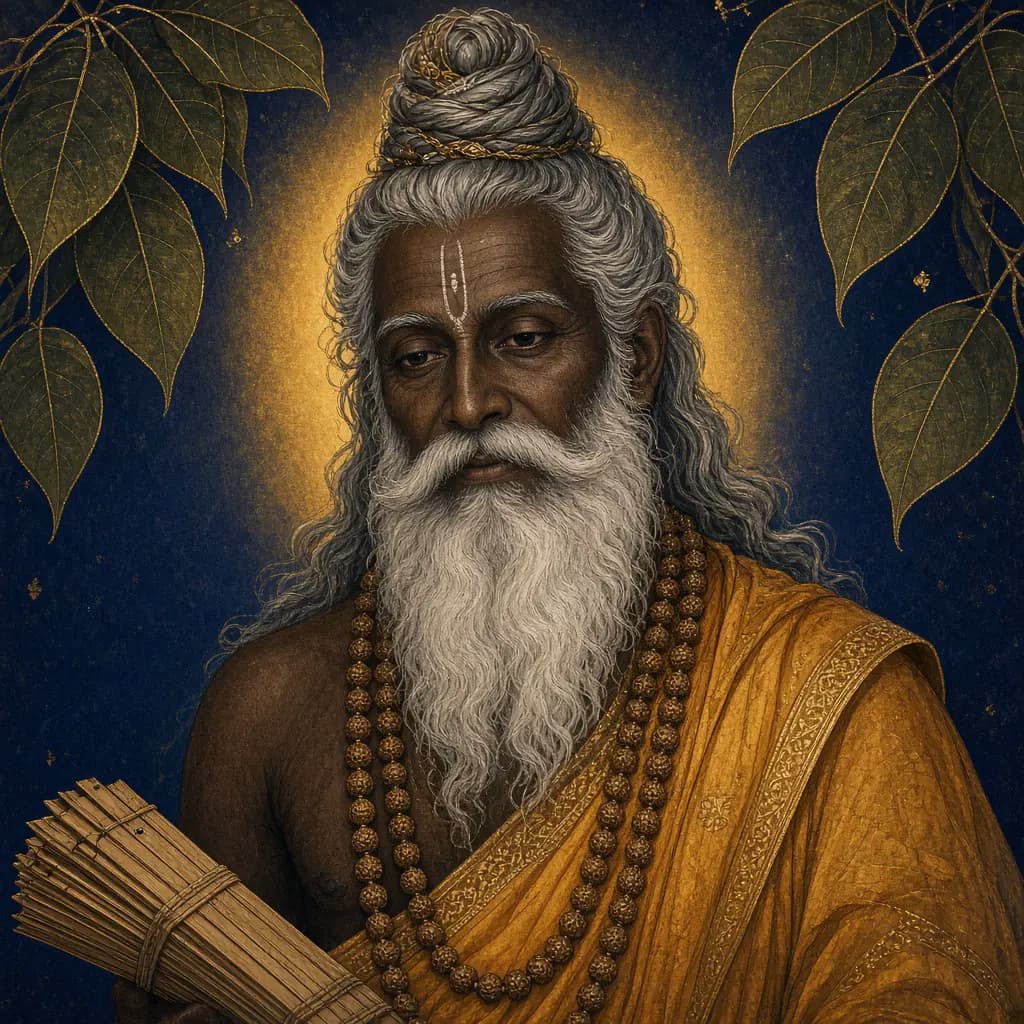 Narrated byThe Sage Narrator
At a glance
- Lectures
- 0 of 19 lectures
- Listening time
- —
- Languages
- Hindi and English
- Level
- For beginners
About this course
The Mahabharata is the longest epic poem in the world and one of the foundations of Indian thought. It is a family story about a war, but also a vast reflection on dharma, power, grief and freedom.
This course walks through all eighteen parvas in short daily lectures. We follow the Critical Edition prepared at Pune wherever possible, and when we tell a beloved story that comes from later tradition, we say so clearly.
No prior knowledge is needed. If you know the story from television or your grandparents, you will find much that is new.
What you'll take away
- Know the arc of all eighteen parvas
- Tell apart the critical text and later additions
- Understand the dilemmas of the main characters
- See where the Gita and Bhishma's teachings sit in the epic
From the texts
The epic's traditional opening invocation calls it Jaya, 'victory'.
Source: nārāyaṇaṃ namaskṛtya, traditional invocation
The story of Ganesha as Vyasa's scribe is found in the popular versions but not in the Critical Edition's reconstructed text.
Source: Mahabharata, Adi Parva, vulgate vs Critical Edition
The epic is told in nested frames: Ugrashravas tells the sages of Naimisha what Vaishampayana told King Janamejaya.
Source: Mahabharata 1.1
It says of itself: what is here may be found elsewhere, but what is not here is found nowhere.
Source: Mahabharata 1.56.33
Day by day
Walk the text one day at a time. A lamp is lit for every lecture that is open to you.
- Free to hear
- Open for you
- Opens with enrolment
- Opens at its hour
- Being prepared
OriginsDays 1 to 3
- Day 1Jaya: How the Great Epic BeginsThe invocation, the three narrators, the story of the divine scribe, and what the epic says about itself.
- Day 2Adi Parva: The House of Kuru
- Day 3Sabha Parva: The Game of Dice
Exile and PreparationDays 4 to 6
- Day 4Aranyaka Parva: Years in the Forest
- Day 5Virata Parva: The Year in Disguise
- Day 6Udyoga Parva: The Last Peace Mission
The Eighteen DaysDays 7 to 10
- Day 7Bhishma Parva: The Gita and the Grandsire
- Day 8Drona Parva: The Teacher on the Field
- Day 9Karna Parva: The Eldest Son
- Day 10Shalya Parva: The Final Day
Aftermath and WisdomDays 11 to 14
- Day 11Sauptika Parva: The Night Raid
- Day 12Stri Parva: The Grief of the Women
- Day 13Shanti Parva: Bhishma Teaches
- Day 14Anushasana Parva: Instructions on Dharma
The Final JourneyDays 15 to 19
- Day 15Ashvamedhika Parva: The Horse Sacrifice
- Day 16Ashramavasika Parva: The Elders Retire
- Day 17Mausala Parva: The End of the Yadavas
- Day 18Mahaprasthanika Parva: The Great Journey
- Day 19Svargarohana Parva: The Ascent
Your teacher
The Sage Narrator
A storyteller in the tradition of the sutas who recited the Itihasa in forest hermitages. He tells the Mahabharata and the Ramayana as the texts tell them.
The Sage Narrator is an artistic character, not a historical person. Where a story comes from later tradition rather than the critical text, he says so.
Scholar review
Scholar review in progress
About the narration
Lectures are narrated using AI from scripts reviewed against the texts. The teacher character is an artistic interpretation.
Questions about this course
Is the teacher really Krishna, Chanakya or a rishi?
No. The teacher is an artistic character with an AI-narrated voice. Every lecture is a written script, checked against the cited texts and reviewed by a scholar before it is published. The character never improvises and never claims divine authority.
Can I try before paying?
Yes. The first lecture of every course is free, with no login needed.
Will it work on my phone with a weak network?
Yes. Lectures are audio with a painted scene, so they use far less data than video. Audio-only mode saves even more.
I found a mistake. What do I do?
Please use the Report an error button on the lecture. Every report goes to our review queue.